Newland calls for running costs to play a greater role in housing affordability discussions

As Ofgem announces that the energy price cap will rise by 4% this October, South West housebuilder Newland Homes is calling for the long-term running costs of a property to play a greater role in discussions about housing affordability.
With energy prices set to change once again, living in a highly energy-efficient home can reduce exposure to fluctuations in energy price.
Over a full year, Newland homeowners heated and powered their EPC A-rated three and four-bedroom detached homes in the South West for between £12 and £16 a week – around the price of a takeaway pizza.
By comparison, Rightmove estimates that equivalent three and four-bedroom detached homes with an EPC D rating currently cost between £52 and £65 a week to heat and power. On this basis, the energy costs reported by Newland homeowners were around 75% lower.
Newland Homes began building zero-carbon homes in 2021. Its properties are designed to generate as much energy as they need for heating, hot water and lighting, resulting in lower energy bills and no net carbon emissions in use.
Each development comprises a collection of EPC A-rated, zero carbon homes incorporating air source heat pumps, solar panels and high levels of insulation to reduce the amount of energy homeowners need to buy.
Marcus Evans, Sales & Marketing Director for Newland Homes, said, “The price cap may change every three months, but the energy efficiency of a home can affect a household’s bills for years to come. Over the course of a 30-year mortgage, an EPC A-rated four-bedroom detached home could save around £80,000 in energy costs compared with a typical second-hand home. Buyers quite rightly focus on the purchase price, but the long-term cost of running a home deserves a place in that decision too.”
He continued, “The figures shared by our homeowners provide a useful real-world snapshot. Energy use will always vary from one household to another, but the difference compared with estimated costs for equivalent EPC D-rated homes is striking. Around £2 a day to heat and power a three or four-bedroom detached home shows what can be achieved when energy efficiency is designed in from the outset. Rather than repeatedly worrying about the next price cap announcement, buyers can choose a home that needs much less energy in the first place.”
The Ofgem price cap limits the unit rates and standing charges suppliers can apply to standard variable tariffs. It does not cap a household’s total bill, which will continue to depend on how much energy is used.
For further information about Newland Homes and its approach to building zero carbon homes, visit: newlandhomes.co.uk or follow Newland Homes on social media @newlandhomes.
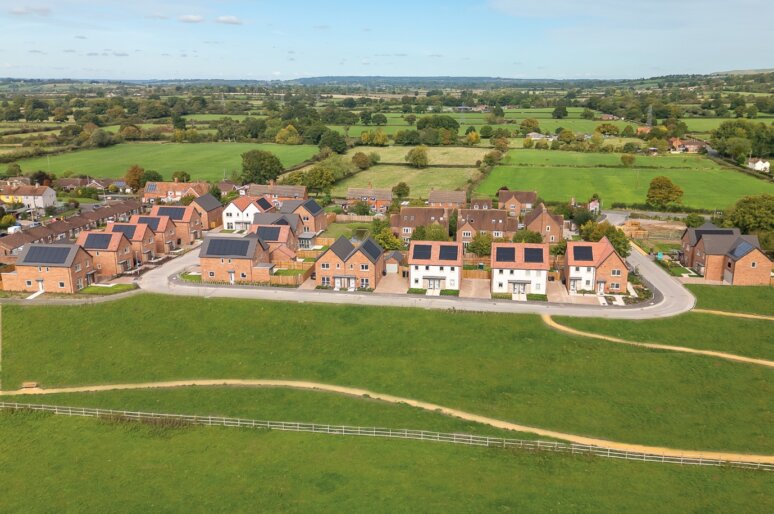
Pictured: Kempster’s Reach is a Newland Homes development in Worton, near Devizes