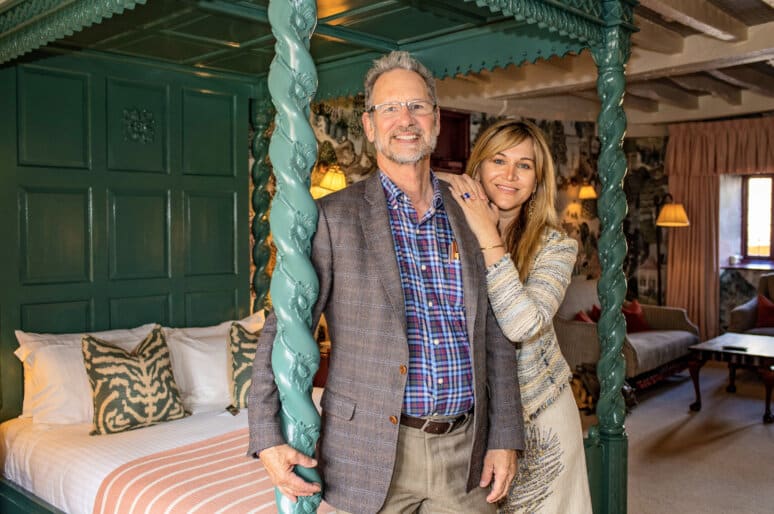
From Texas to Malmesbury – Meet the owners of The Old Bell Hotel

Trading Texas to make it in Malmesbury, hospitality entrepreneurs Kim and Whit Hanks purchased the 13th-century Old Bell Hotel in 2021.
Following their acquisition, they completely refurbished the property and also expanded their holdings in the area to include the neighbouring Abbey House and Gardens.
We caught up with them to recap on their first five years at the historic venue and find out a bit about the Hanks family ties to the area.
Whit, you’ve owned and operated hospitality businesses in the US for many years. What first drew you to Malmesbury as a place to invest?
Kim and I had spent more than a year searching for hotels across the UK to purchase, visiting probably twenty in total, before we came to Malmesbury on a personal trip while I researched my genealogy.
I had attended an auction in Malmesbury around 30 years earlier and learned at the time that many members of the Hanks family had once lived in the town, so I returned hoping to trace my family roots.
Through a series of coincidences, we discovered that The Old Bell Hotel was quietly for sale on the ‘whisper market’. We had originally approached the owners of Abbey House as potential purchasers and, purely by chance, learned that The Old Bell Hotel was also available.
When did you begin to realise there was a deeper personal connection between your family history and the town, and how has that informed your thinking since?
We had visited Malmesbury on several occasions as leisure travellers. However, on one trip, we decided to come straight from landing at Heathrow Airport to Malmesbury to attend church in the nearby village of Garsdon, hoping to find a connection there.
The Church Warden was very friendly and showed us around the church after the service, before inviting us to his home for lunch that very same day. He made a few calls and discovered that there was a Henry Garlick Hanks clock at the town’s museum that we might want to see.
A conversation at the museum then led to our discovery that Abbey House might be for sale. After many months of negotiations with both the owners of Abbey House and The Old Bell Hotel, we were able to purchase both properties around the same time.
It was only while clearing out The Old Bell Hotel that we discovered a box of old deeds revealing that the same Henry Garlick Hanks, a distant relative, had owned the leasehold and lived at The Old Bell Hotel during the 19th century.
That family connection has undoubtedly made us even more committed to The Old Bell Hotel and to the success of the town itself. I’m a tenth-generation prodigal son!
When you first took ownership of The Old Bell Hotel, what did you feel absolutely had to be protected, and where did you feel change was essential?
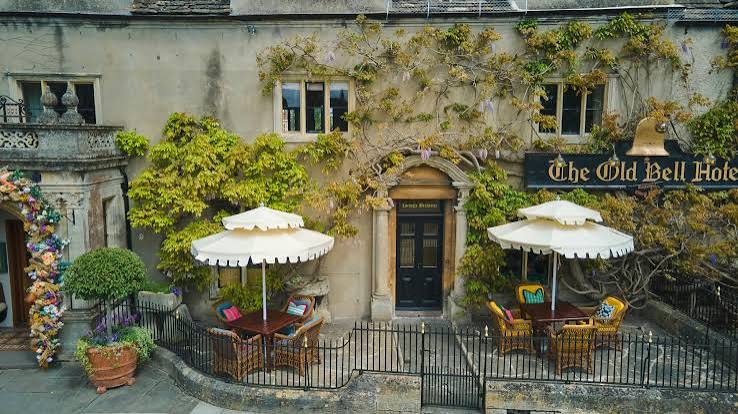
We realised that The Old Bell Hotel is a Grade I listed building and therefore heavily protected. However, the bones of the property, the roof, and the overall layout were all fine with us, so we focused mainly on cosmetic changes such as new paint, wallpaper, and redecorating the spaces throughout the hotel.
Later, we added a covered outdoor area, the Tyger Bar, and expanded the function room to accommodate more guests. We have a few further minor changes planned to provide additional accommodation and services for our guests, but it is equally important to us that we preserve the building’s authenticity and character.
How do you balance running a commercially successful hotel with the responsibility of caring for a building with such a long and significant history?
We don’t see the character and antiquity of The Old Bell Hotel as constraints to its commercial viability. In many ways, they are part of the hotel’s story and one of the reasons guests are drawn to it.
Of course, there are minor inconveniences in terms of what can and cannot be added or altered, but we have never found those restrictions to be a burden. Hospitality specifically (and business success more generally) is challenging anywhere, and every location comes with its own natural constraints that must be worked with.
Alongside The Old Bell Hotel, you’re also developing Abbey House Manor. Looking ahead, how do you see the two working together, and what role do you hope they play in Malmesbury’s future?
Our goal in Malmesbury, just as it was in Dripping Springs, Texas, is to create a true destination resort experience. We want our guests to arrive somewhere magical, a place that transports them into an almost otherworldly atmosphere where they can enjoy unique experiences that refresh and revitalise them.
To achieve that, we believe we need to offer a rich mix of activities, dining experiences, learning opportunities, adventure, and romance, all woven together in a natural way. We hope that by adding Abbey House Manor and Folklore Spa to that total experience in Malmesbury we can create a destination that makes us proud.
We also hope that a positive by-product of that vision will be greater vitality for the town itself and for the fellow merchants and local businesses offering goods and services that help make a visit to our community so special.
We are used to a more entrepreneurial environment in Texas, where there are generally fewer regulations to accommodate. However, the core challenge is ultimately the same in both places: how do we best accommodate the needs of our guests and deliver those services in the most efficient and thoughtful way possible?
You operate hospitality businesses in both the UK and the US, including Camp Lucy in Texas. How do you promote and position the hotels as a group, and does having an international portfolio help attract guests to places like The Old Bell?
As we continue to expand our hotel brand, we are looking to build meaningful relationships between our properties. Those connections can exist through the look and feel of the hotels themselves, but also through the experiences they create for both staff and guests.
We value giving our staff opportunities to work within a different culture, just as we enjoy welcoming guests who are travelling to experience a foreign destination. We also like the idea that both our guests and our teams come to recognise that, despite our unique local traditions, people everywhere are ultimately striving for many of the same goals and values.
Perhaps that understanding encourages a little more respect for one another, and helps people get along a little better.
You work together as a couple across multiple hospitality businesses. What makes that partnership work, and how do your roles differ in practice?
Kim and I have very different personalities. I’m more introverted, academic, and structured, while Kim is more creative, exuberant, and task oriented.
In many ways, it takes both types of people to successfully nurture a small business, and we have a great deal of respect for each other’s strengths and skills. What ultimately unites our efforts is a shared value system and a common desire to create a meaningful and memorable experience for both our staff and our guests.
From your experience running businesses in both countries, what practical lessons would you want UK and US entrepreneurs to learn from each other?
Europeans seem to have a much better understanding of what a balanced life looks like. Texan entrepreneurs, on the other hand, often struggle to slow down, take time off, and relax a little.
That workaholic tendency certainly helps when it comes to building and running a successful business, but living in the UK has taught us how important it is to enjoy the community around us and to value the friendships of our neighbours more deeply.
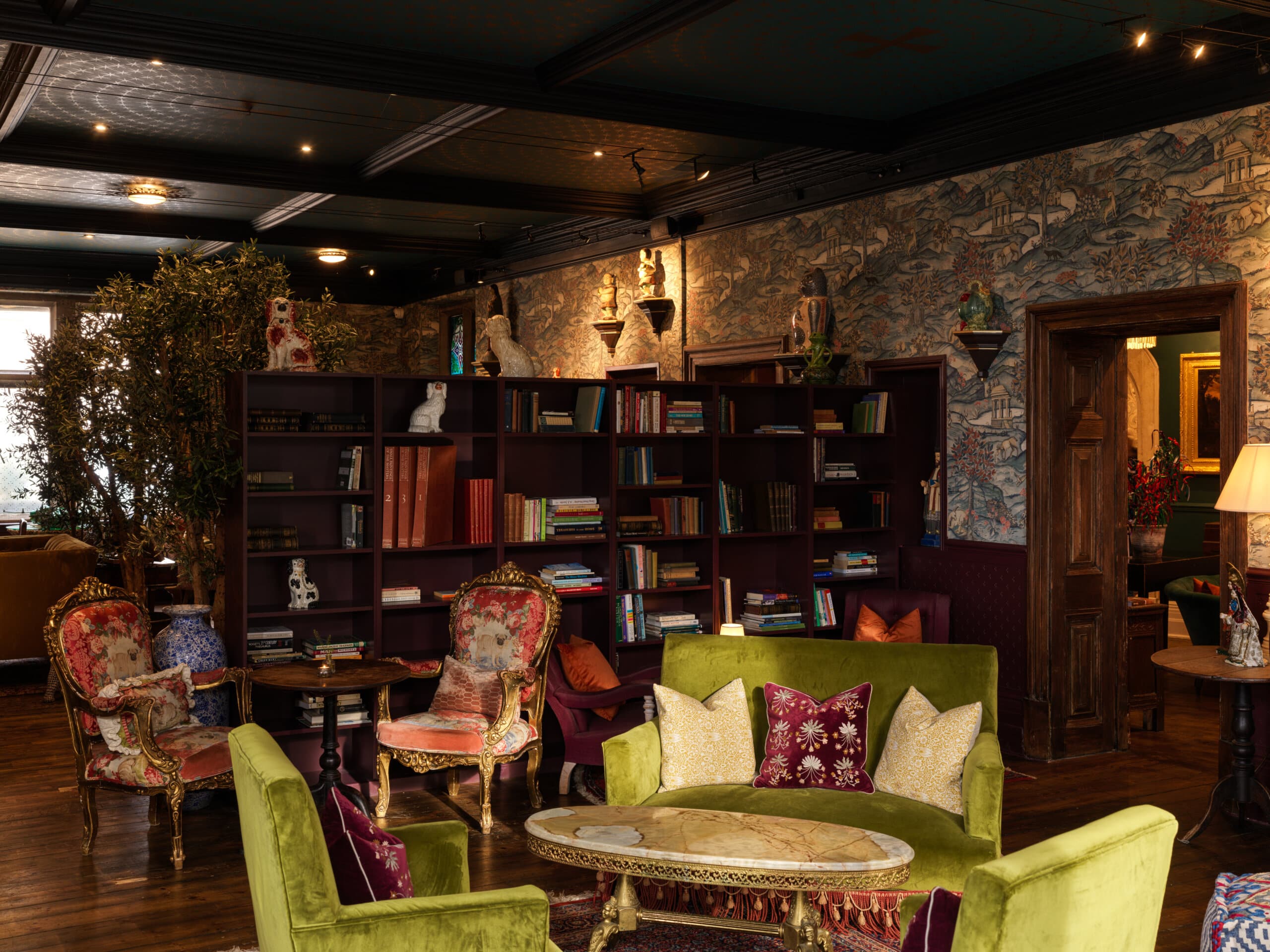
As part of the broader vision, Kim has led the creative direction of the hotel’s interiors…
Kim, the refurbishment feels confident without being intrusive. How did you decide where to be bold and where to hold back in a Grade I listed building?
When working with a Grade I listed building, you have to preserve the fabric of the property and remain sympathetic to the period in which it was maintained before receiving listed status. As a result, the design work tends to be more cosmetic in nature.
I’ve always liked making our hotels feel like a home, so rich wallcoverings, patterned fabrics, and a healthy ladling of antiques are a winning combination for us. We also love adding treasures we discover while travelling, just as you would in your own home. It gives the hotel a sense of breathing and evolving over time, rather than feeling static or overly designed.
The interiors at The Old Bell Hotel feel highly considered and personal. How involved are you in shaping those decisions, and what do you want guests to feel when they walk into the space?
I was completely lockstep with our interior designer, Charlotte Smiley, when it came to choosing the wallcoverings that have become such an iconic part of The Old Bell Hotel. I have had a design crush on Lewis & Wood wallpapers for close to twenty years, so I always knew this project had to feature their designs. Most of the bedrooms in the main house use their papers, including important spaces such as the entrance and dining room.
I have also long admired the work of Elizabethan painter Melissa White, and several of her papers appear throughout the hotel as well.
Another aspect of the hotel that is especially close to our hearts is the art and antiques. We transported an entire container of pieces from our home in Texas, including some of our favourite furniture. The pug chairs, for example, were a romantic gift from Whit from around the time we first started dating. We also brought a bench that belonged to Whit’s mother. We incorporate her furniture into all of our projects, so in many ways it feels as though she is still with us.
More than anything, we want travellers to feel as though they are guests in our home.
The refurbishment has been deliberately wide‑ranging. What does it now offer guests that perhaps wasn’t there before, particularly for local residents and the business community?
We wanted the local community to see The Old Bell Hotel as a lively place to gather over a meal or a cider. To make the hotel especially welcoming for locals, we created the Tyger Bar, which features seasonal concepts and menus such as our Summer Tiki Bar and Après Ski offerings.
It is an indoor-outdoor space, heated during the winter months and open to the fresh summer air when the weather is warm. The relaxed atmosphere and casual fare were very much designed with the town in mind.
Another project we were passionate about was expanding the Garden Room for weddings and special occasions. It has also become an important space for the community, hosting speaking engagements during Wessex Week, Hobbs talks, and a variety of local charity events.
The Old Bell Hotel has re‑established itself as a place locals genuinely use, not just somewhere visitors stay. How intentional was that, and why does that matter to you?
Local community support is vital to the health of The Old Bell Hotel as a business. Most of our staff are local townspeople, and they genuinely enjoy having family and friends spend time in the same spaces where they work.
It would be a shame if a hotel sitting at the heart of the town was only ever used by travellers. The intermingling of locals with guests from far-flung places adds a wonderful dimension to the conversations and atmosphere within the hotel, and in many ways continues the long legacy of The Old Bell Hotel dating back to 1220.
The town is incredibly proud of its landmarks, and we see ourselves as proud stewards of this special place.
With The Old Bell Hotel now finding its rhythm, what feels most important to focus on next?
My next project is telling the story of The Old Bell Hotel. Each room is named after an important figure connected to the town, and as a steward of this remarkable hotel, I want to continue developing the story of how it came to exist, who was living in the town throughout each era, and how The Old Bell Hotel came to be regarded as the oldest hotel in England. For me, storytelling is one of the most important ways of preserving this hotel as the treasure it truly is.
When someone arrives in Malmesbury for the first time and walks through the doors of The Old Bell Hotel, what do you hope they take away from their visit?
First and foremost, I want visitors to feel welcome. The South, both in the United States and in the UK, is known for being hospitable and friendly, and that is a common thread that runs throughout all our properties.
A very close second is wanting guests to appreciate that they are staying in the oldest borough in all of England, a town that continues to thrive because of the people who live here. They genuinely care about the High Street, they volunteer their time, and they are constantly working to make the town better.
You simply cannot replicate Malmesbury!
The Old Bell Hotel is hosting a special Christmas in July networking event on Wednesday 8th July. Find out more and book on here.
Visit the Old Bell Hotel online at: www.oldbellhotel.co.uk